THE ENGLISH CLUB

Mostrando entradas con la etiqueta ACTIVITIES. Mostrar todas las entradas
Mostrando entradas con la etiqueta ACTIVITIES. Mostrar todas las entradas
1 de noviembre de 2013
28 de octubre de 2012
HALLOWEEN
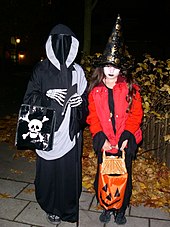
Halloween or Hallowe'en (a contraction of its original title "All Hallows' Evening") also known as All Hallows' Eve is a yearly holiday observed around the world on October 31, the eve of the Western Christian feast of All Hallows. Most scholars believe that All Hallows' Eve was originally influenced by western European harvest festivals and festivals of the dead with pagan roots, particularly the Celtic Samhain.Others maintain that it originated independently of Samhain.
Typical festive Halloween activities include trick-or-treating (also known as "guising"), attending costume parties, carving pumpkins into jack-o'-lanterns, lighting bonfires, apple bobbing, visiting haunted attractions, playing pranks, telling scary stories, and watching horror films.
How did Halloween come about in Spain?
Halloween is more popular in the north of Spain due to ancestral links with celtic ancestors who arrived in this region around 3,000 years ago. Despite mixing with the indigenous Iberian culture, a great interest came about in holidays and celebrations imported from the Celtic world.
How do they celebrate Halloween in Spain?
Although Halloween is still a relatively new phenomenon in Spain, the Spanish people go all out for celebrating it to the maximum as with any kind of fancy dress festival. You will see many more people dressed up in outrageous costumes and parading the streets in larger groups than you would ever see in England. It is more popular in the north of Spain and celebrated much more in larger cities where you are bound to be invited to a costume party or see posters advertising them everywhere. Most shops and cafes have baskets of treats outside for trick or treaters.
Along Galicia’s northern coast it is traditional to carve pumpkins, light bonfires and consume “quemadas” fire water infused with herbs – claimed to be an ancient drink originating from the Celtic people a symbolic act to burn off bad luck and the negative energy associated with Halloween.
Activities for halloween
9 de abril de 2012

27 de julio de 2011
BUCKINGHAM PALACE
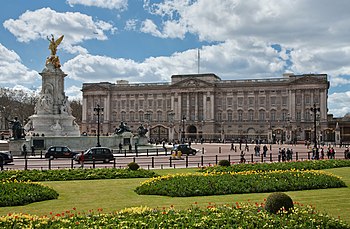 Buckingham Palace is the London home and primary residence of the British monarch. Located in the City of Westminster, the palace is a setting for state occasions and royal hospitality. It has been a focus for the British people at times of national rejoicing and crisis.
Originally known as Buckingham House, the building which forms the core of today's palace was a large townhouse built for the Duke of Buckingham in 1705. It was subsequently acquired by George III in 1761 as a private residence for Queen Charlotte, and known as "The Queen's House". During the 19th century it was enlarged, principally by architects John Nash and Edward Blore, forming three wings around a central courtyard. Buckingham Palace finally became the official royal palace of the British monarch on the accession of Queen Victoria in 1837.
The last major structural additions were made in the late 19th and early 20th centuries, including the East front which contains the well-known balcony on which the Royal Family traditionally congregate to greet crowds outside. However, the palace chapel was destroyed by a German bomb in World War II; the Queen's Gallery was built on the site and opened to the public in 1962 to exhibit works of art from the Royal Collection.
The original early 19th-century interior designs, many of which still survive, included widespread use of brightly coloured scagliola and blue and pink lapis, on the advice of Sir Charles Long. King Edward VII oversaw a partial redecoration in a Belle Époque cream and gold colour scheme. Many smaller reception rooms are furnished in the Chinese regency style with furniture and fittings brought from the Royal Pavilion at Brighton and from Carlton House. The Buckingham Palace Garden is the largest private garden in London.
The state rooms, used for official and state entertaining, are open to the public each year for most of August and September, as part of the Palace's Summer Opening.
ANSWER THESE QUESTIONS IN ENGLISH
1. ¿Qué es Buckingham Palace?
2. ¿Por qué se llama así?
3. ¿Cómo fue destruida la capilla?
4. ¿Qué es Queen's Gallery?
5. ¿Por qué es famoso el balcón?

THE CHANGING OF THE GUARDS
The Household Division
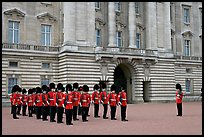
The men you will see in front of Buckingham Palace (and other locations) are not just ceremonial guards but also serving Soldiers, they also perform duties throughout the world as professional soldiers and are known as some of the most elite and skilled soldiers in the British Army.. This is why Changes may occur in the guard change as the soldiers are required for operational duties.
The Household Division is made up of seven Regiments.
These comprise:
And the five regiments on foot:
And the five regiments on foot:
Most of the time it is soldiers from one of these regiments that will be outside Buckingham Palace, but do not be surprised if on some occasions you do not see the traditional guardsmen, particularly in August when often other regiments guard the Queen.
The responsibility of guarding the Sovereign by the Household Troops (as they were known at the time) dates back to the time of Henry VII (1485-1509).
These are some of the best soldiers in the British Army and have fought in virtually every major area of conflict with great distinction since the 17th Century. They also take an active role in protecting their Sovereign; at night they patrol the grounds of both Buckingham Palace and St. James's Palace.
BUSCA EN EL DICCIONARIO EL SIGNIFICADO DE LAS PALABRAS RESALTADAS EN AMARILLO PINCHANDO SOBRE ELLAS
Suscribirse a:
Entradas (Atom)